If you've driven past a construction site in Atlanta, you've seen traffic barricades doing their job. Those orange-and-white-striped barriers aren't just sitting there looking official. They're actively protecting workers, guiding traffic, and preventing accidents in work zones across Georgia.
Understanding the different types of road safety barriers isn't just useful; it's essential. It's essential knowledge for contractors, project managers, and anyone responsible for work zone safety. The right barricade protects your crew and keeps traffic flowing. The wrong one creates hazards and compliance violations.
Quick Answer: What Are Traffic Barricades?
Traffic barricades are portable or fixed devices with reflective rails used to control, redirect, or block vehicular and pedestrian traffic. Road barricade types are classified by the Manual on Uniform Traffic Control Devices (MUTCD) into three main categories: Type I, Type II, and Type III, each designed for specific traffic speeds and work zone conditions.
Traffic Barricade Types: Quick Comparison
Before diving into details, here's how the main road barrier types compare:
| Barricade Type | Reflective Rails | Primary Use | Speed Limit | Best For |
|---|---|---|---|---|
| Type I | 1 rail | Pedestrian control, low-speed areas | Under 35 mph | Short-term work, residential streets |
| Type II | 2 rails | Urban detours, medium traffic | 35-45 mph | Multi-day projects, city streets |
| Type III | 3 rails | Road closures, high-speed areas | 45+ mph | Highway work, complete closures |
| Jersey Barriers | Solid barrier | Positive vehicle protection | All speeds | High-speed work zones, traffic separation |
| Water-Filled | Solid barrier | Temporary positive protection | All speeds | Special events, emergency response |
Understanding the MUTCD Classification System
The Manual on Uniform Traffic Control Devices establishes federal standards for all types of road safety barriers used throughout the United States. According to MUTCD regulations, barricades must meet specific design criteria, reflectivity standards, and application guidelines to ensure consistent traffic control nationwide.
These classifications exist because different types of road barricades serve distinct purposes. A barrier that works perfectly on a quiet residential street will fail on I-285, where traffic moves at 70 mph. Using the wrong type doesn't just risk citations; it also risks legal action. It poses a genuine danger to your crew and passing drivers.
Type I Barricades: Lightweight Traffic Control
Design and Construction
Type I barricades feature a single reflective rail mounted on an A-frame design that folds flat for transport. Industry standards require the rail to be 8 to 12 inches tall with alternating orange and white retroreflective stripes sloping downward at 45 degrees, pointing traffic in the safe direction.
When to Use Type I Barricades
Type I barricades are specifically designed for low-speed, low-risk applications:
- Pedestrian traffic control and walkway closures
- Residential streets where speeds stay under 35 mph
- Short-term utility repairs and maintenance work
- Sidewalk construction and repairs
- Parking lot work zones
- Small excavations and minor hazards
- Indoor facility work requiring crowd control
These barriers are lightweight by design. When struck by a vehicle, they collapse rather than causing damage or becoming projectiles. This collapsibility makes them ideal for areas where pedestrians are present or where vehicle speeds remain low.
Practical Applications
For utility contractors making quick gas line repairs or telecommunications crews working in neighborhoods, Type I barricades typically provide adequate protection. One crew member can carry and deploy several at once, making them efficient for fast-moving projects. They're also the most cost-effective option when equipment rental budgets are tight.
Type II Barricades: Enhanced Visibility Solutions
Design Features
Type II barricades step up visibility with two reflective rails instead of one. Like Type I, they use an A-frame folding design, but the additional rail significantly improves visibility, especially during nighttime operations or adverse weather conditions common throughout Georgia.
When Type II Barricades Make Sense
According to MUTCD guidelines, Type II barricades are appropriate for:
- Road detours on conventional streets and urban areas
- Work zones lasting multiple days or weeks
- Lane shifts and transitions on city streets
- Areas requiring enhanced nighttime visibility
- Construction sites where traffic moves between 35-45 mph
- Projects near schools or high-pedestrian areas
Why the Extra Rail Matters
That second reflective surface isn't cosmetic. Research shows drivers recognize two-rail barricades earlier than single-rail options, particularly in low-light conditions. Earlier recognition translates to smoother merging, reduced sudden braking, and fewer near-miss incidents.
Road construction crews managing week-long projects on urban streets rely heavily on Type II barricades. They provide superior visibility without the bulk and deployment complexity of Type III barriers.
Type III Barricades: Maximum Protection and Visibility
Construction and Specifications
Type III barricades represent the heavy-duty option among road barricade types. Federal standards require three full-width reflective rails on a sturdy frame. Unlike their smaller counterparts, Type III barricades don't fold. They're designed for extended deployment in high-traffic, high-speed environments.
Required Applications for Type III
MUTCD standards mandate Type III barricades for specific situations:
- Complete road closures on any roadway
- Highway construction where traffic exceeds 45 mph
- Major detours that will remain in place for weeks or months
- Interstate work zones and maintenance
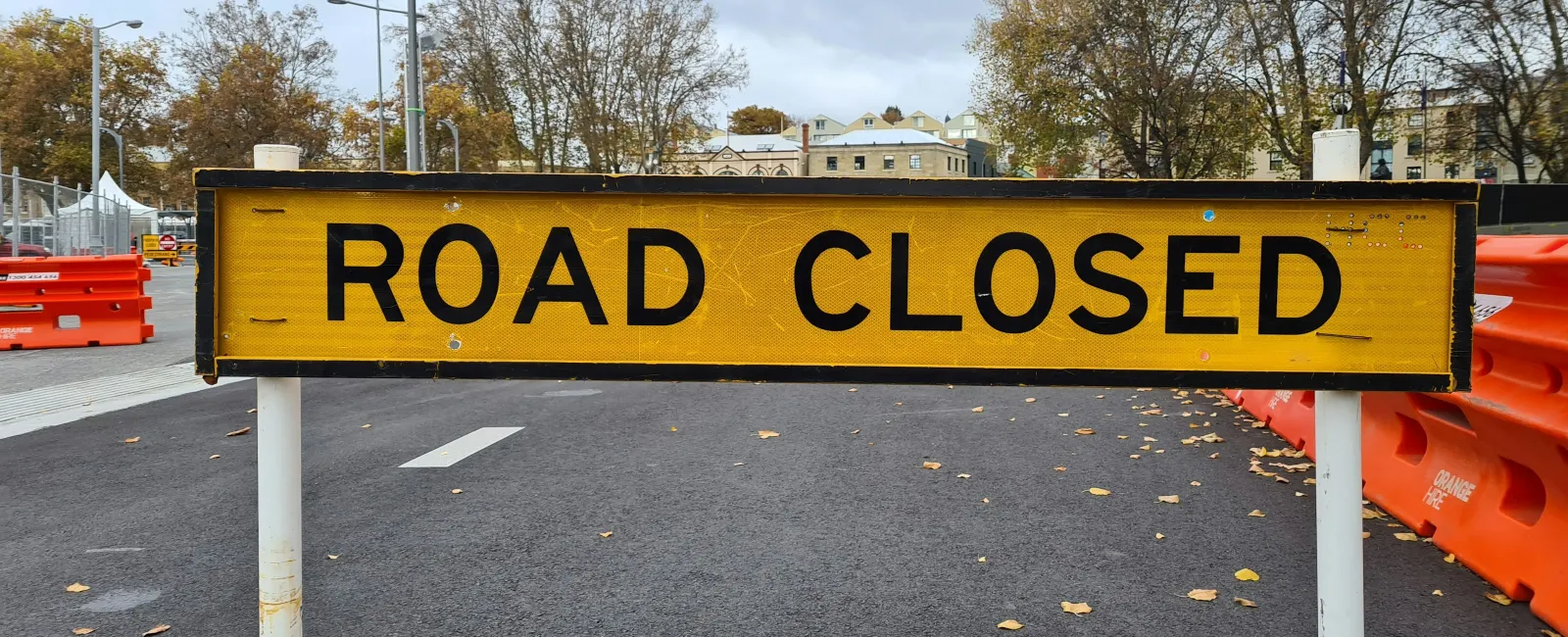
- Any application where "road closed" messaging must be unmistakable
- Work zones requiring mounted signage
Professional Deployment Considerations
These barriers communicate authority. When drivers see a Type III barricade, they understand they're not getting through. Many models accept mounted signs, allowing you to attach "Road Closed," "Detour," or directional signage directly to the barrier.
For traffic control plans on major roadways, Type III barricades are often non-negotiable. Their size and visibility ensure compliance with state regulations while providing clear guidance to motorists.
Jersey Barriers: Positive Protection Devices
What Makes Jersey Barriers Different
Jersey barriers (also called K-rails or concrete barriers) provide what traffic engineers call "positive protection." Unlike collapsible barricades, these road barrier types are designed to redirect or absorb vehicle impacts rather than collapse.
Design and Physics
The distinctive sloped profile serves a critical safety function. When a vehicle contacts a Jersey barrier, the slope causes the tire to ride up slightly, redirecting the vehicle parallel to the barrier instead of bouncing it back into adjacent traffic lanes. This design has prevented countless crossover accidents on highways nationwide.
Traditional vs. Modern Options
Traditional Jersey barriers are solid concrete, weighing 4,000 pounds or more, and requiring heavy equipment to position. Modern water-fillable versions use heavy-duty plastic construction. Empty, two workers can move them. Filled with water or sand, they weigh up to 1,800 pounds and provide substantial impact resistance.
When Jersey Barriers Are Required
Professional traffic control companies deploy Jersey barriers for:
- Highway work zones where traffic moves at high speeds
- Creating protected work areas for crews near active travel lanes
- Long-term interstate construction projects
- Separating opposing traffic flows during lane shifts
- Protecting expensive equipment from errant vehicles
- Emergency response situations requiring immediate protection
Water-Filled and Sand-Filled Barriers
Flexibility and Deployment Advantages
Water-filled and sand-filled barriers offer a practical middle ground for temporary positive protection. These hollow plastic barriers deploy empty (weighing 30-40 pounds) and then fill on-site with water or sand from local sources.
Key Benefits
Contractors choose fillable barriers for several reasons:
- Logistics: Transport dozens of empty in a single truck
- Weight: Heavy and stable when filled, light when deploying
- Visibility: Bright orange or yellow for maximum noticeability
- Speed: Quick setup and removal compared to concrete
- Cost: Significantly cheaper than moving solid concrete barriers
Best Applications
These barriers work particularly well for road construction projects, special events requiring temporary traffic control, and emergency response situations where crews need substantial protection deployed quickly.
How to Choose the Right Road Barricade Types
Factor 1: Traffic Speed
Speed determines your minimum barrier requirement. MUTCD guidelines establish clear thresholds:
- Under 35 mph: Type I barricades acceptable
- 35-45 mph: Type II barricades recommended minimum
- 45+ mph: Type III barricades or positive protection required
- Highway speeds (55+ mph): Jersey barriers or equivalent positive protection
Don't underestimate speed requirements. A 55 mph zone demands Type III barriers or Jersey barriers, regardless of project duration or budget constraints.
Factor 2: Project Duration
Time frames influence which types of road safety barriers make economic and practical sense:
- Hours: Type I or II folding barricades for easy deployment and removal
- Days to weeks: Type II or III, depending on traffic speed
- Weeks to months: Type III barricades or Jersey barriers that withstand weather exposure
- Long-term (3+ months): Permanent or semi-permanent barrier systems
Factor 3: Available Space
Work zone geometry affects barrier selection:
- Tight shoulders: Type I or II barricades with smaller footprints
- Standard lanes: Type II or III, depending on traffic
- Wide work areas: Jersey barriers for maximum protection
- Urban streets: Consider pedestrian access and visibility angles
Factor 4: Protection Level Required
Assess the actual risk to determine appropriate protection:
- Low risk (pedestrian areas, parking lots): Type I adequate
- Moderate risk (urban streets, short-term work): Type II sufficient
- High risk (highway work, worker exposure): Type III minimum
- Critical risk (high-speed traffic nearby): Jersey barriers mandatory
Factor 5: Regulatory Compliance
MUTCD compliance isn't optional. Every state follows federal standards, and Georgia has additional requirements for certain applications. Verify your barrier selection meets:
- Federal MUTCD specifications
- State DOT requirements
- Local municipality standards
- Project-specific permit conditions
Working with professional traffic control services ensures compliance across all regulatory levels..
Why Professional Barrier Selection Matters
Understanding different types of road safety barriers is one thing. Knowing which specific barrier works for your unique situation requires experience and expertise that goes beyond reading manuals.
At AQC Traffic Control, our ATSSA-certified crews have deployed every road barricade type across Georgia and throughout the Southeast. We understand that a shoulder closure in Buckhead demands different equipment than a highway project in South Georgia. We know that traffic patterns shift throughout the day, weather changes plans, and real-world conditions rarely match textbook scenarios.
Professional traffic control means:
- Proper assessment: Evaluating actual site conditions, not just checking boxes
- Right equipment: Selecting appropriate barriers for specific applications
- Compliant setup: Meeting MUTCD, state DOT, and local requirements
- Ongoing monitoring: Adjusting as conditions change throughout the project
- Safety focus: Prioritizing worker and motorist protection above convenience
Frequently Asked Questions About Traffic Barricades
What's the difference between a barricade and a barrier?
In traffic control terminology, "barricades" typically refer to temporary, portable structures, such as Type I, II, and III barricades, used for short- to medium-term traffic control. "Barriers" generally describe more substantial structures designed for vehicle impact protection, such as Jersey barriers or concrete highway barriers. However, the terms are often used interchangeably in the industry.
Can traffic cones replace barricades?
Traffic cones and barricades serve different purposes. Cones are channelizing devices used to delineate travel paths and create tapers. Barricades are used to close, restrict, or redirect traffic. MUTCD specifies when each device is appropriate. You cannot substitute cones for barricades in situations requiring positive closure or in areas where the MUTCD mandates barricades. For more on cones, see traffic cone colors and meanings.
Getting Traffic Control Right From the Start
The best traffic control is invisible to drivers. They navigate your barriers naturally, merge smoothly, and everyone gets through safely. That seamless experience requires selecting the right types of road safety barriers, setting them up correctly, and maintaining them throughout your project.
Whether you need basic Type I barricades for a utility repair or a comprehensive traffic control plan with Jersey barriers for major highway work, choosing appropriate road barricade types makes the difference between a safe project and a dangerous one.
Need help determining which barriers your project requires? Contact AQC Traffic Control at (470) 480-0348. Our team will assess your specific situation and recommend exactly what you need to keep traffic moving and workers protected. We serve contractors throughout metro Atlanta and the Southeast with professional traffic control services that meet MUTCD standards and exceed safety expectations.